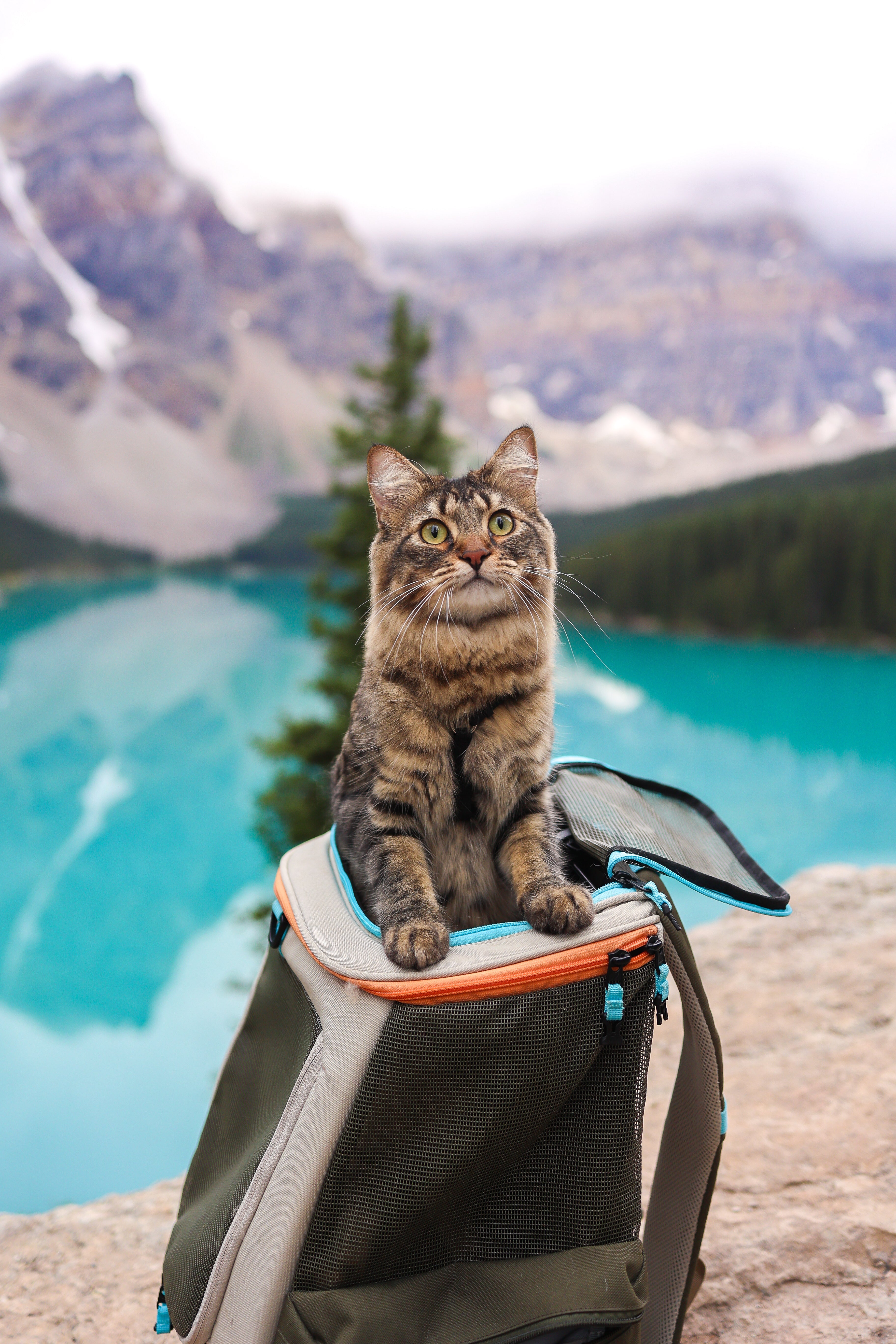
Your cat is capable of so much more than the couch. These real-world tips from experienced adventure cat owners will help you safely expand what your cat's life looks like — one small step at a time.
We asked the speakers of the upcoming 2026 Travel Cat Virtual Summit — a free online event bringing together the world's most experienced cat adventurers — to share their single best piece of advice for doing more with your cat safely. The result is 20 hard-won, experience-backed tips you won't find in generic pet advice columns.
Whether your cat has never left the apartment or already hikes on weekends, this is your roadmap.
🐾 Want to hear from these experts live? The 2026 Travel Cat Virtual Summit is completely free to attend. Register here at travelcatshop.com/summit and learn directly from the adventure cat community's best.
The #1 Thing Every Adventure Cat Owner Gets Wrong
Most people try to do too much, too fast. That's the consensus from nearly every speaker at the summit — and it shows up in their advice again and again.

Vicky Kim of @tachitheblackcat, whose cat Tachi has traveled internationally, puts it plainly:
"One of the biggest mistakes I see is people trying to do too much too fast. Cats build confidence through consistent, positive exposure — not big leaps. Start small, repeat often, and let your cat set the pace. That's how you safely build up to bigger adventures."
This isn't about limiting your cat. It's about building a foundation strong enough to support the adventures you actually want to have.
20 Tips for Safely Doing More With Your Cat
1. Socialize and prepare before you go anywhere

Sara Carson — @thesupercolliesmom, professional dog trainer and cat adventurer with cats Goose, Maverick & Rooster
"The key to safely doing more with your cat is proper socialization and preparation for the outside world. As a dog trainer, I always tell my clients not to bring an animal into public if they can't handle it — and the same applies to cats. Set them up for success, go at their pace, and make every experience a positive one."
Sara's background in dog training gives her a unique lens: an animal that can't handle a new environment shouldn't be pushed into one. Build that tolerance gradually, indoors first.
2. Build trust before you build distance

Kaitlin Fitzpatrick — @acatnamedpeak, traveling seasonally between Florida and Maine with cats Peak and Summit
"Doing more with your cat starts with trust, not distance. We've learned traveling with Peak and Summit that slow introductions, consistent routines, and the right gear turn nervous moments into confident adventures. From road trips to trail walks, safety comes down to preparation — secure harnesses, hydration, and reading your cat's body language. The goal isn't to push limits, but to expand them together, one positive experience at a time."
Kaitlin's cats go from ocean-side Florida to mountain Maine — but it started with short, predictable outings that built familiarity before anything ambitious.
3. Make every outing fun — not just possible

Lois Sharp — @ragdollatticus, UK-based adventurer with ragdoll Atticus, currently converting a camper van for European travel
"Our best tip is to always make it a fun experience for them! Think about what they enjoy and incorporate that into the adventure — their favourite treats, their favourite toys to play with out and about. Engage with them in a fun way and try to be in a calm and positive mood, as animals can definitely pick up on human emotions!"
Atticus came along for van conversion days, short nature walks, and eventually full woodland adventures — all because Lois kept the experience positive and tailored to what he actually enjoyed.
4. Take it slow and let your cat set the pace

Christina Turner — @laviedelupin, cat mom to Lupin, who has flown on airplanes and attended trade shows
"Take it slow, keep it positive, and let your cat set the pace. Start early when you can, use treats to build confidence, and focus on small wins. With patience and consistency, even the most hesitant cats can learn to explore more safely and comfortably."
Lupin now rides in his backpack on neighborhood walks and public outings — but he got there one treat-rewarded step at a time.
5. Start small — sitting outside counts

Victoria Sobinova — @sphynxcifer, creator behind Luci the adventure sphynx cat, based in Toronto
"Start small and go at your cat's pace. Not every cat will be ready for big adventures right away, and that's okay. Creating positive experiences — whether it's sitting in a carrier outside or a short stroll — builds confidence over time and makes adventures enjoyable for both you and your cat."
Luci has since gone on city strolls and international flights. But Victoria is quick to remind people: sitting in a carrier on your building steps is a valid adventure, and it matters.
6. Patience is the whole game

Sayaka Sekishima — @freyja_siberian, documenting life with 4-year-old Siberian cat Freyja who has traveled to Japan
"Patience will be the key in all cat training, as some cats can adapt faster and some won't. Reading their body language helps you understand more about when and what to do with outdoor training. Rushing and forcing will result in damaging your relationship with your cat. Always end with a positive experience!"
Freyja flew internationally — but her foundation was built on trips where Sayaka watched carefully and never pushed past what her cat could handle.
7. Socialize them to sounds, smells, and new places gradually

Taylor Meadows — @mywildmeadows, hiking and paddle boarding with foster-fail cats Summit and Cave across the U.S. and Canada
"I think the biggest thing is building your cat's confidence slowly. It takes time to introduce them to new places, smells, and sounds. You can absolutely do more with your cat as long as you put the time and effort into socializing and desensitizing them — where they'll learn to love it!"
Summit and Cave regularly hike and paddleboard now. Taylor's process: slow exposure, positive association, and repeating until new environments feel normal.
8. Evolve your training every single day

Benji Chang — @vancat.mochi, full-time traveling photographer and vanlife adventurer with kitten Mochi
"Building trust and confidence between owner and cat is key — we have to learn together and grow together in how we go outside. If it starts by just carrying them outside for 5 minutes, that's perfect. Everyday, try to find ways to 'evolve' your training: introduce a leash, try small safe-space free roams. Keep lots of treats on hand and use positive reinforcement. The more we trust each other on adventures, the more fun we can have in the long run."
Benji adopted Mochi at 4 months old and has been documenting the entire training journey in real time — a rare, honest look at how it actually unfolds day by day.
9. It's never too late to start — adult cats can do this too

Fleur Harsveld — @kittyombra, adventure cat trainer based in Turin, Italy with rescue cat Ombra
"A lot of people still think cats are either strictly indoor animals or that they should be free roaming outside. I don't really agree with either of those extremes. From what I've seen working with both shy, older cats and more confident ones, most cats are capable of a lot more than people expect. I often get asked if it's too late to start with an adult or skittish cat — and in my experience, it really isn't. You just need to go slower and adjust your expectations. Make realistic plans, and be really, really patient. 'Doing more' with your cat is about expanding what their world looks like and providing nature's enrichment in a way that still remains safe for them."
Ombra came to Fleur as a skittish adult rescue. She now adventures confidently. Fleur's key insight: the timeline just looks different, not impossible.
10. A vet check and vaccines come before any adventure

Dr. Laria Herod — @squallymuffin, small animal veterinarian and cat mom to Ruby Rue Biscuits & Furrell PurrNando
"Many of the more fun adventures in life have a learning curve — adventuring with your cat is no different! First and foremost, ensure that your cat is healthy and up to date on their vaccines. You don't want them contracting preventable illnesses while exploring. Also, ensure that your cat is microchipped in the unfortunate event that they get away from you. Having a microchip or even a tracking collar can greatly increase the likelihood of being reunited with your baby safely."
Dr. Herod brings a veterinarian's perspective to adventure cat ownership — and her reminder about vaccines and microchipping is one that even experienced cat adventurers sometimes overlook.
11. Your cat's body language is your guide

Rita Ward — @leothelynxie, Edmonton-based adventurer with 5-year-old lynx point Siamese Leo
"One of the most valuable things I've learned is that confidence comes from a cat feeling both safe and comfortable. I pay close attention to Leo's body language and always let him set the pace, while making sure he has a secure space to return to — like his Travel Cat backpack. When your cat knows they have a safe space and that their signals are respected, it builds trust — and that's what allows them to feel comfortable and truly enjoy exploring with you."
Leo explores pet-friendly shops, nature trails, and the Rocky Mountains — and Rita's secret is knowing exactly what he's communicating the whole time.
12. Start slower than you think you need to

Rae Kell — @bark.with.it, multi-pet content creator and cat adventurer with Sparrow (started young) and Boba (started at 2–2.5 years old)
"Start slower than you think you need to. The biggest mistake people make is rushing the process. Build a strong foundation indoors with harness training, then gradually introduce new environments in a controlled, low-stress way. Always let your cat set the pace. Confidence comes from consistency, not forcing it."
Rae has the dual perspective of training a cat from kittenhood and successfully turning a 2-year-old cat into an adventure cat — which makes her advice on pacing especially credible.
13. Master harness comfort before going anywhere

Carly Peters — @pickles_and.olive, documenting the harness and backpack training journey with sibling cats Pickles and Olive
"Take it slow at first. You might be very excited to just take them outside, but take the time to train them in wearing the harness inside before venturing out. Getting them comfortable putting on the harness and wearing it for longer and longer periods of time is a process — give your cat and yourself grace while learning."
Pickles and Olive are two very different cats: one eager, one cautious. Carly's content is honest about the fact that even siblings don't follow the same timeline.
14. A backpack is your cat's safe space — don't skip it

Rachel Gernander — @hampurrburgerhelper, Minneapolis adventurer with 5-year-old Ham
"Our backpack is our #1 most important item on any adventure. It's Ham's safe space in case he gets overstimulated in public. Also, walking a cat can be slower than walking a dog — there have been many instances on trails when we need to pick up the pace, and it's easy to scoop Ham into his backpack so we can get a move on. Do your research before heading on any new outing: 'pet-friendly' sadly doesn't always include cats. Call or message venues beforehand. Find out when they tend to be less busy than usual."
Ham has had overwhelming moments in public. The backpack — specifically the Travel Cat Navigator — gives him somewhere to retreat that feels like home, which makes the whole outing safer and more sustainable.
15. Consistency beats intensity every time

Thereysa Tabert — @gingiandluna, international traveler with cats Gingi and Luna
"My biggest advice with training cats is to take it SLOW and be consistent with positive rewards! Make it fun for the both of you, and if your cat isn't getting it — try again tomorrow! Slow and steady wins the race!"
Thereysa has traveled across countries with her two cats. Her ethos: don't push a session past where it's enjoyable. End on success, even if success that day is just getting the harness on.
16. Train the carrier first — indoors, progressively

Melissa Millett — @tonicthecatactor, owner of four professional trick cat actors Tonic, Sashimi, Twix, and Tuna, who have performed globally
"We train the cats to get comfortable with the harness, leash, and backpack indoors prior to using outdoors. Progressive steps is a great way to set yourself up for success!"
When your cats work commercially, there's no room for a bad experience. Melissa's indoor-first, progressive approach is the professional standard — and it applies to every cat, not just actors.
17. Quality of experience matters more than quantity of outings

Amber Aquart, CPDT-KA — @amberaquart, certified professional dog and cat trainer with 15 years of experience, cats Finn and River
"Always prioritize your cat's comfort level above all else. Your cat can learn to have fun experiences out and about simply by observing. Go at your cat's pace and always focus on positive experiences. Quality is more important than quantity."
Amber has trained animals for television and film. Her professional credential — CPDT-KA — and her decade-plus of behavior work make her framing of "quality over quantity" more than a platitude: it's the actual science of behavioral conditioning.
18. Getting cats comfortable flying starts with car rides

Marina Lalbeharry — cat mom to Picchu, a 4-year-old Siberian who has taken over a dozen domestic and international flights
"I get asked the most how I got Picchu comfortable for flying. My best advice is getting your cat familiar with car rides and being in busy environments."
The step most people skip before a flight: shorter car trips and busier settings. By the time Picchu boards a plane, he's already practiced being in a moving, stimulating environment. The airport is just a louder version of something familiar.
19. When dogs appear, stay calm and use your backpack

Freya Hodson — @freya_adventureawaits, cat-friendly accommodation advocate in the UK Lake District with rescue Bengal Lola
"The question we get asked the most is what we do about dogs. I am super on it — if I spot a dog in the distance, I'll just pick Lola up and put her on top of her backpack so she can still see, but is well out of the way, and the dog has absolutely no idea she's there."
Simple, practical, and brilliant. The backpack isn't just a carrier — it's a quick-access safe zone that keeps Lola elevated, visible, and calm. Lola, a rescue Bengal who explores the Lake District regularly, relies on this move more than any other.
20. A well-fitted harness and safe space change everything

Michelle P. — @chupiedoesntgiveameow, cat mom to Chupie the tiny, unbothered international explorer
"Be prepared with a well-fitted harness, a backpack or carrier, and your kitty will feel more confident every time it goes out and has a safe and happy experience."
Chupie explores local restaurant patios and international destinations alike. Michelle's insight cuts to the simplest truth: the right gear, properly fitted, makes the cat feel capable — and that confidence compounds with every positive outing.
How to Actually Start: A Step-by-Step Framework
Across all 20 experts, the same progression shows up again and again. Here's the pattern, consolidated:
- Check with your vet first. Make sure your cat is healthy, vaccinated, and microchipped before any outdoor adventures. (Thanks, Dr. Herod.)
- Introduce the gear indoors. Leave the harness and backpack out as normal furniture. Let your cat sniff and explore them on their own terms.
- Practice wearing the harness at home. Short sessions, high-value treats, no pressure to go anywhere.
- Step outside — briefly. Five minutes on your doorstep counts. Let them sniff the air and choose to go back in.
- Build up slowly. A quiet street. A park. A trail. A pet-friendly café. Repeat each new environment until it feels familiar.
- Always bring a backpack. Even on leash walks. It's your cat's retreat when stimulation gets to be too much.
- Read body language constantly. Flat ears, a low tail, freezing, or panting are signals to slow down or stop.
- End every outing on a positive note. Treats, play, and praise when you get back. The memory of that ending shapes what they expect next time.
What Gear Do Adventure Cats Actually Use?
The speakers at the 2026 Travel Cat Virtual Summit are a self-selected group of experienced cat adventurers — and their most-requested gear tells you something real about what actually works in the field.
The Travel Cat Navigator Backpack came up more than any other product — it's the go-to safe space carrier for cats like Leo, Ham, Lupin, Chupie, and more. Multiple speakers also mentioned the Day Tripper H-Style Harness for everyday outings and the Porta-Pawty+ Covered Travel Litter Box for longer trips.
A note on fit: Several speakers mentioned that a poorly fitted harness is a safety risk. Before any outdoor outing, make sure your cat's harness is snug (two-finger rule) and escape-proof. The Travel Cat harness guide covers how to fit one correctly.
FAQ: Doing More With Your Cat Safely
Is it too late to start taking my adult cat outside?
No — and Fleur Harsveld's journey with rescue cat Ombra is proof. Adult and even older cats can learn to enjoy outdoor experiences. The process simply takes longer and requires even more patience and smaller steps. If your cat is between 2–6 years old, check out Rae Kell's and Laria Herod's approaches specifically — both have successfully adventure-trained older cats.
How long does harness training usually take?
There's no universal timeline. Some cats wear a harness comfortably within a week; others take months. What matters is that each step is mastered before moving to the next. Rushing produces setbacks. Most experienced cat adventurers recommend spending at least two to four weeks on harness desensitization before ever going outside.
Do I always need a backpack, even on leash walks?
Yes — and nearly every speaker in this article said so, implicitly or explicitly. A backpack gives your cat a retreat when they get overstimulated, lets you move faster on trails, and creates a familiar "home base" feeling in new environments. It's not just for transport; it's a safety tool.
What if my cat hates the carrier?
Start slower. Leave it open in your living room for weeks. Put treats inside. Let your cat sleep in it. The goal is to make the carrier boring before it becomes transportation. Rita Ward's process with Leo — letting him choose to enter rather than placing him inside — is a good model.
How do I know when my cat is ready for a bigger adventure?
When they're relaxed and curious (rather than frozen or trying to escape) at each current level of challenge, they're ready to try the next step. Loose body language, exploratory sniffing, and eating treats in a new environment are all green lights.
________________________________________________________________________________________________
Adventure Essentials Recommended by Summit Speakers
“The Navigator” Backpack → Safe retreat space for hikes, airports, and city walks
“The Day Tripper” Harness → Lightweight everyday harness training
“The True Adventure” Harness → Secure fit for active explorers
“The Whisker Wagon” Stroller → Great for senior cats, shy cats, or long outings
“The Porta-Pawty+” Covered Travel Litter Box → Maintains routine while traveling
“The Pack N’ Paw” Crate → Helpful for hotel stays, road trips, and decompression time
Join the Speakers Live at the 2026 Travel Cat Virtual Summit
Every expert quoted in this article will be speaking at the 2026 Travel Cat Virtual Summit — a free online event hosted by Travel Cat. You'll be able to ask questions directly, watch real demonstrations, and connect with the adventure cat community.
Register for free at travelcatshop.com/summit →
Whether you're just thinking about harness training for the first time or planning a cross-country road trip with your cat, this summit was built for you.
This article was compiled by the Travel Cat team, drawing on firsthand tips submitted by our 2026 Virtual Summit speakers — a group of experienced cat adventurers, professional trainers, and veterinarians from around the world who travel regularly with their cats using Travel Cat gear.